-
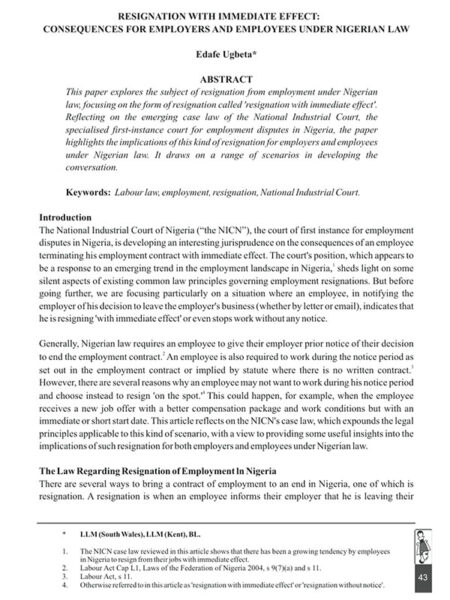
Resignation with Immediate Effect: Consequences for Employers and Employees under Nigerian Law
0₦2,500.00Edafe Ugbeta in his article, Resignation with Immediate Effect: Consequences for Employers and Employees under Nigerian Law, explores the subject of resignation from employment under Nigerian law, focusing on the form of resignation called ‘resignation with immediate effect’. Reflecting on the emerging case law of the National Industrial Court, the specialised first-instance court for employment disputes in Nigeria, Ugbeta highlights the implications of this kind of resignation for employers and employees under Nigerian law. He draws on a range of scenarios in developing the conversation.
-
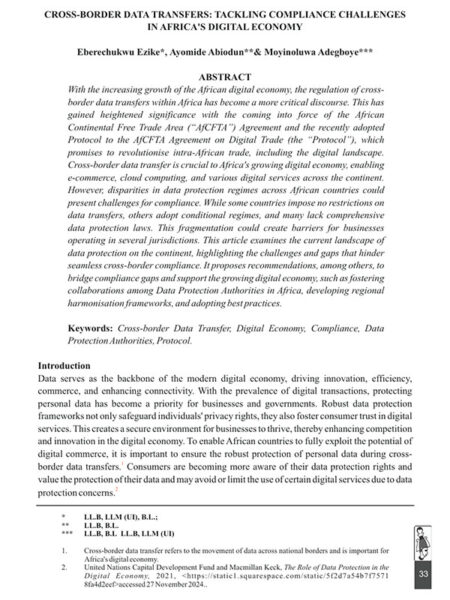
Cross-Border Data Transfers: Tackling Compliance Challenges in Africa’s Digital Economy
0₦2,500.00Eberechukwu Ezike, Ayomide Abiodun, and Moyinoluwa Adegboye, in their article, Cross-Border Data Transfers: Tackling Compliance Challenges in Africa’s Digital Economy, examine the current landscape of data protection on the continent, highlighting the challenges and gaps that hinder seamless cross-border compliance. With the increasing growth of the African digital economy, the regulation of cross-border data transfers within Africa has become a more critical discourse. This has gained heightened significance with the coming into force of the African Continental Free Trade Area (“AfCFTA”) Agreement and the recently adopted Protocol to the AfCFTA Agreement on Digital Trade (the “Protocol”), which promises to revolutionise intra-African trade, including the digital landscape. Cross-border data transfer is crucial to Africa’s growing digital economy, enabling e-commerce, cloud computing, and various digital services across the continent. However, disparities in data protection regimes across African countries could present challenges for compliance. While some countries impose no restrictions on data transfers, others adopt conditional regimes, and many lack comprehensive data protection laws. This fragmentation could create barriers for businesses operating in several jurisdictions. Ezike et al propose recommendations, among others, to bridge compliance gaps and support the growing digital economy, such as fostering collaborations among Data Protection Authorities in Africa, developing regional harmonisation frameworks, and adopting best practices.
-
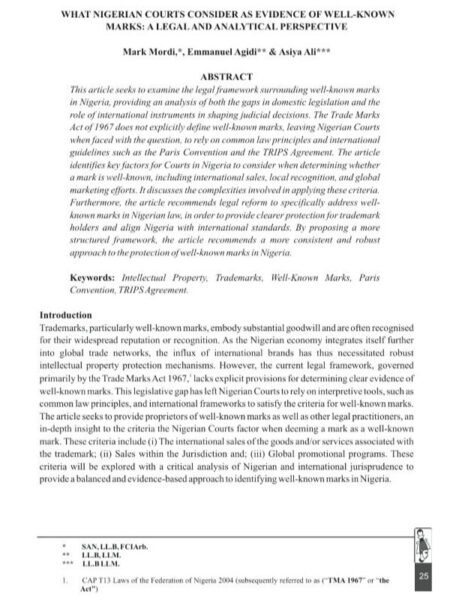
What Nigerian Courts Consider as Evidence of Well-Known Marks: A Legal and Analytical Perspective
0₦2,500.00Mark Mordi SAN, Emmanuel Agidi & Asiya Ali in their article, What Nigerian Courts Consider as Evidence of Well-Known Marks: A Legal and Analytical Perspective, seek to examine the legal framework surrounding well-known marks in Nigeria, providing an analysis of both the gaps in domestic legislation and the role of international instruments in shaping judicial decisions. The Trade Marks Act of 1967 does not explicitly define well-known marks, leaving Nigerian Courts when faced with the question, to rely on common law principles and international guidelines such as the Paris Convention and the TRIPS Agreement. Mordi et al identify key factors for Courts in Nigeria to consider when determining whether a mark is well-known, including international sales, local recognition, and global marketing efforts. Mordi et al discuss the complexities involved in applying these criteria. Furthermore, the article recommends legal reform to specifically address well-known marks in Nigerian law, in order to provide clearer protection for trademark holders and align Nigeria with international standards. By proposing a more structured framework, Mordi et al recommend a more consistent and robust approach to the protection of well-known marks in Nigeria.
-
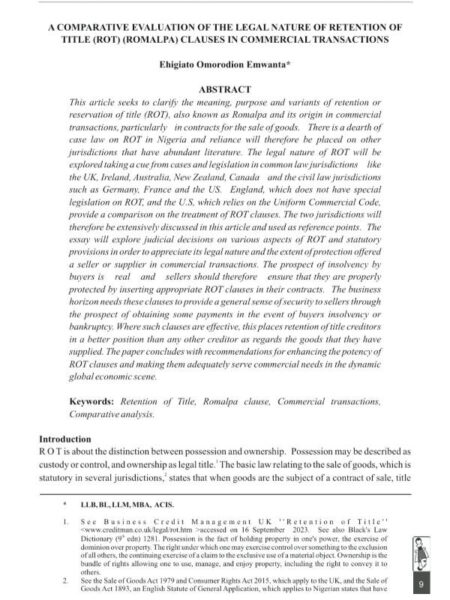
A Comparative Evaluation of the Legal Nature of Retention of Title (ROT) (ROMALPA) Clauses in Commercial Transactions
0₦2,500.00Ehigiato Emwanta in his article, A Comparative Evaluation of the Legal Nature of Retention of Title (ROT) (ROMALPA) Clauses in Commercial Transactions, seeks to clarify the meaning, purpose and variants of retention or reservation of title (ROT), also known as Romalpa and its origin in commercial transactions, particularly in contracts for the sale of goods. The legal nature of ROT is explored taking a cue from cases and legislation in common law jurisdictions like the UK, Ireland, Australia, New Zealand, Canada and civil law jurisdictions such as Germany, France and the US. England, which do not have special legislation on ROT, and that of the U.S, which relies on the Uniform Commercial Code, provide a comparison on the treatment of ROT clauses. The two jurisdictions are extensively discussed and used as reference points. Emwanta further explores judicial decisions on various aspects of ROT and statutory provisions in order to appreciate its legal nature and the extent of protection offered a seller or supplier in commercial transactions. Emwanta underscores the relevant and importance of ROT clauses and concludes with recommendations for enhancing the potency of ROT clauses and making them adequately serve commercial needs in the dynamic global economic scene.
-
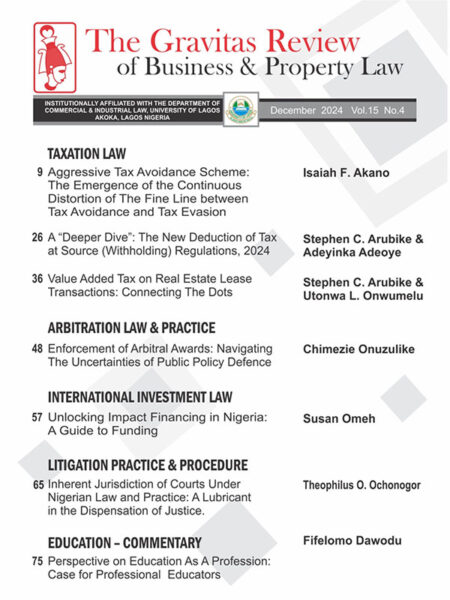
The Gravitas Review of Business & Property Law Vol.15 No.4 – E-Book
0₦5,000.00In this issue of The Gravitas Review of Business & Property Law Vol.15 No.4, there are well researched articles on:
- Taxation
- Arbitration Law & Practice
- International Investments
- Litigation Practice & Procedure
- Education – Commentary
-
The Gravitas Review of Business & Property Law Vol.15 No.4
0₦5,000.00In this issue of The Gravitas Review of Business & Property Law Vol.15 No.4, there are well researched articles on:
- Taxation
- Arbitration Law & Practice
- International Investments
- Litigation Practice & Procedure
- Education – Commentary
-
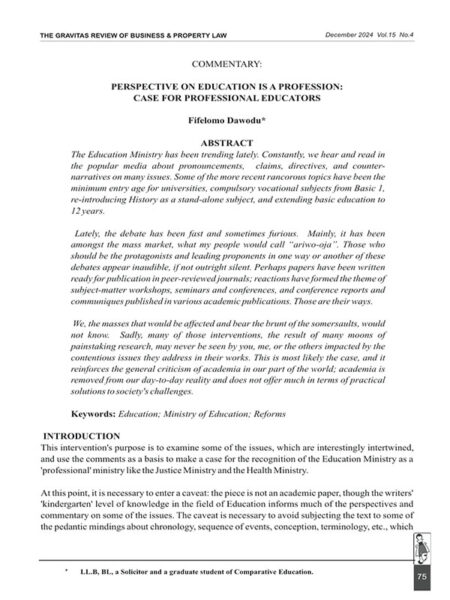
Perspective on Education as a Profession: Case for Professional Educators
0₦2,500.00Fifelomo Dawodu in her commentary, Perspective on Education as a Profession: Case for Professional Educators, takes a swipe at the various somersaults in the regulatory policies of the Ministry of Education highlighting the systemic impact on the entire educational sector. The Education Ministry has been trending lately. Constantly we hear and read in the popular media about pronouncements, claims, directives, counter-narratives on many issues. Some of the more recent rancorous topics have been minimum entry age for universities, compulsory vocational subjects from Basic 1, re-introduction of History as a stand alone subject, and extension of basic education to 12 years. The debate of late has been fast and sometimes, furious. Sadly, many of those interventions, the result of many moons of painstaking research may never be seen. This is most likely the case and it reinforces the general criticism of academia in our part of the world, that academia is removed from our day to day reality and does not offer much in terms of practical solutions to society’s challenges.
-
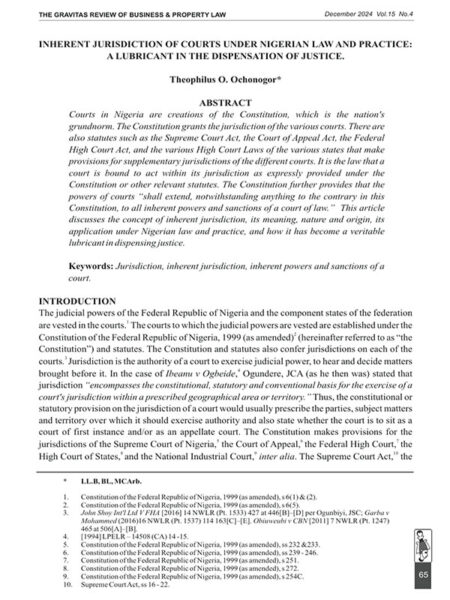
Inherent Jurisdiction of Courts under Nigerian Law and Practice: A Lubricant in the Dispensation of Justice
0₦2,500.00Theophilus Ochonogor in his article, Inherent Jurisdiction of Courts under Nigerian Law and Practice: A Lubricant in the Dispensation of Justice, discusses the concept of inherent jurisdiction, its meaning, nature and origin, its application under Nigerian law and practice, and how it has become a veritable lubricant in the dispensation of justice. Courts in Nigeria are creations of the Constitution, which is the nation’s grundnorm. The Constitution grants the jurisdictions of the various courts. There are also such statutes as the Supreme Court Act, the Court of Appeal Act, the Federal High Court Act and the various High Court Laws of the various states which make provisions for supplementary jurisdictions of the different courts. It is the law that a court is bound to act within its jurisdiction as expressly provided under the Constitution or other relevant statute. The Constitution further provides that the powers of courts “shall extend, notwithstanding anything to the contrary in this Constitution, to all inherent powers and sanctions of a court of law.”
-
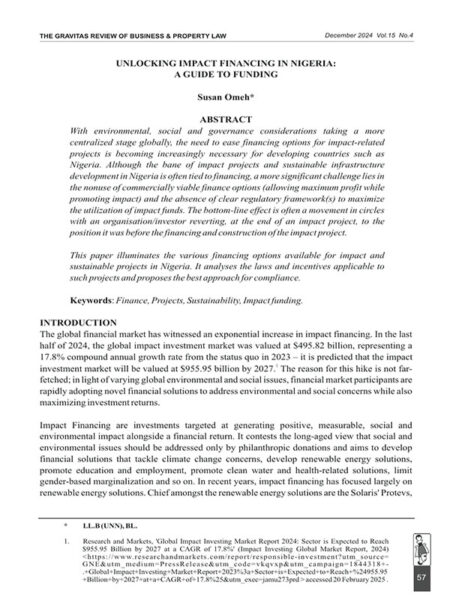
Unlocking Impact Financing in Nigeria: A Guide to Funding
0₦2,500.00Susan Omeh in her article, Unlocking Impact Financing in Nigeria: A Guide to Funding, sheds light on the various financing options available for impact and sustainable projects in Nigeria. In doing this, Omeh analyses the laws and incentives applicable to such projects while also proffering the best approach for compliance. With environmental, social and governance considerations taking a more centralized stage globally, the need to ease financing options for impact-related projects is becoming increasingly necessary for developing countries such as Nigeria. Although the bane of impact projects and sustainable infrastructure development in Nigeria is often tied to financing, a greater challenge lies in the nonuse of commercially viable finance options (allowing maximum profit while promoting impact) and the absence of clear regulatory framework(s) to maximize the utilization of impact funds. The bottom-line effect is often a movement in circles with an organization/investor reverting, at the end of an impact project, to the position it was before the financing and construction of the impact project.
-
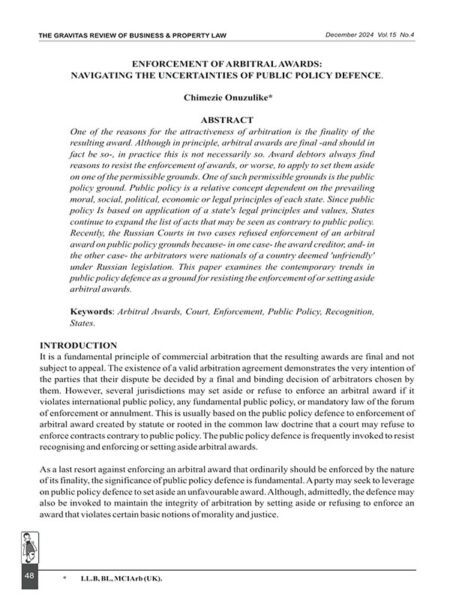
Enforcement of Arbitral Awards: Navigating the Uncertainties of Public Policy Defence
0₦2,500.00Chimezie Onuzulike in his article, Enforcement of Arbitral Awards: Navigating the Uncertainties of Public Policy Defence, examines the contemporary trends in public policy defence as a ground for resisting the enforcement of or setting aside arbitral awards. One of the reasons for the attractiveness of arbitration is the finality of the resulting award. Although in principle, arbitral awards are final -and should in fact be so-, in practice this is not necessarily so. Award debtors always find reasons to resist the enforcement of awards, or worse, to apply to set them aside on one of the permissible grounds. One of such permissible grounds is the public policy ground. Public policy is a relative concept dependent on the prevailing moral, social, political, economic or legal principles of each state. Since public policy Is based on application of a state’s legal principles and values, States continue to expand the list of acts that may be seen as contrary to public policy. Recently, the Russian Courts in two cases refused enforcement of an arbitral award on public policy grounds because- in one case- the award creditor, and- in the other case- the arbitrators were nationals of a country deemed ‘unfriendly’ under Russian legislation.
-
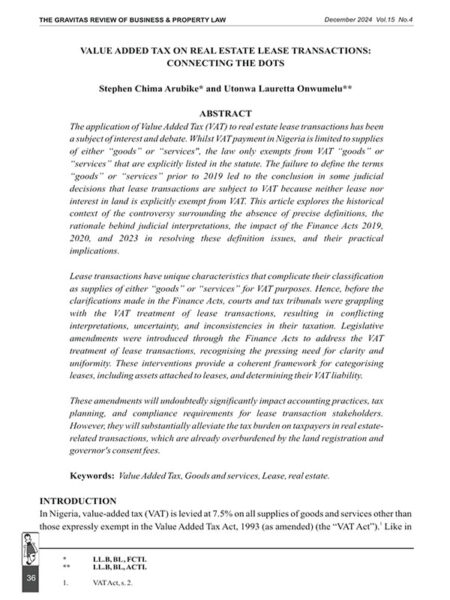
Value Added Tax on Real Estate Lease Transactions: Connecting the Dots
0₦2,500.00In their article, Value Added Tax on Real Estate Lease Transactions: Connecting the Dots, Stephen Arubike and Utonwa Onwumelu tackle the application of Value Added Tax (VAT) to real estate lease transactions. Whilst VAT payment in Nigeria is limited to supplies of either “goods” or “services”, the law only exempts from VAT “goods” or “services” that are explicitly listed in the statute. The failure to define the terms “goods” or “services” prior to 2019 led to the conclusion in some judicial decisions that lease transactions are subject to VAT because neither lease nor interest in land is explicitly exempt from VAT. Arubike and Onwumelu aim to explore the historical context of ‘the absence of precise definition’ controversy, the rationale behind judicial interpretations, the impact of the Finance Acts 2019, 2020 and 2023 in resolving these definition issues and their practical implications.
-
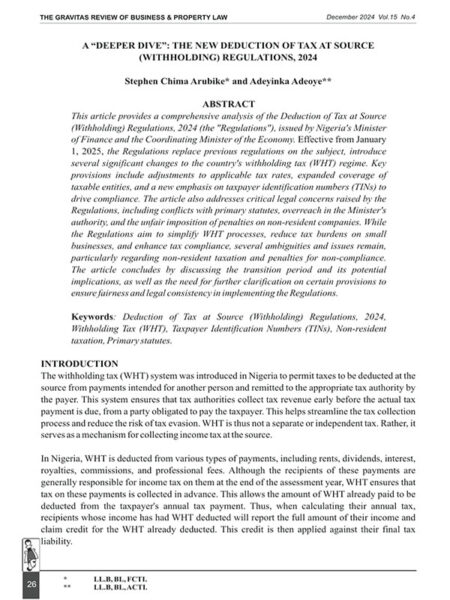
A “Deeper Dive”: The New Deduction of Tax at Source (Withholding) Regulations, 2024
0₦2,500.00Stephen Arubike and Adeyinka Adeoye in their article, A “Deeper Dive”: The New Deduction of Tax at Source (Withholding) Regulations, 2024, provide a comprehensive analysis of the Deduction of Tax at Source (Withholding) Regulations, 2024 (the “Regulations”), issued by Nigeria’s Minister of Finance and the Coordinating Minister of the Economy. Effective from January 1, 2025, the Regulations replace previous regulations on the subject, introduce several significant changes to the country’s withholding tax (WHT) regime. Key provisions include adjustments to applicable tax rates, expanded coverage of taxable entities, and a new emphasis on taxpayer identification numbers (TINs) to drive compliance. Arubike and Adeoye also address critical legal concerns raised by the Regulations, including conflicts with primary statutes, overreach in the Minister’s authority, and the unfair imposition of penalties on non-resident companies. While the Regulations aim to simplify WHT processes, reduce tax burdens on small businesses, and enhance tax compliance, several ambiguities and issues remain, particularly regarding non-resident taxation and penalties for non-compliance. Arubike and Adeoye conclude by discussing the transition period and its potential implications, as well as the need for further clarification on certain provisions to ensure fairness and legal consistency in implementing the Regulations.
The Gravitas Review of Business & Property Law