
Description
ABSTRACT
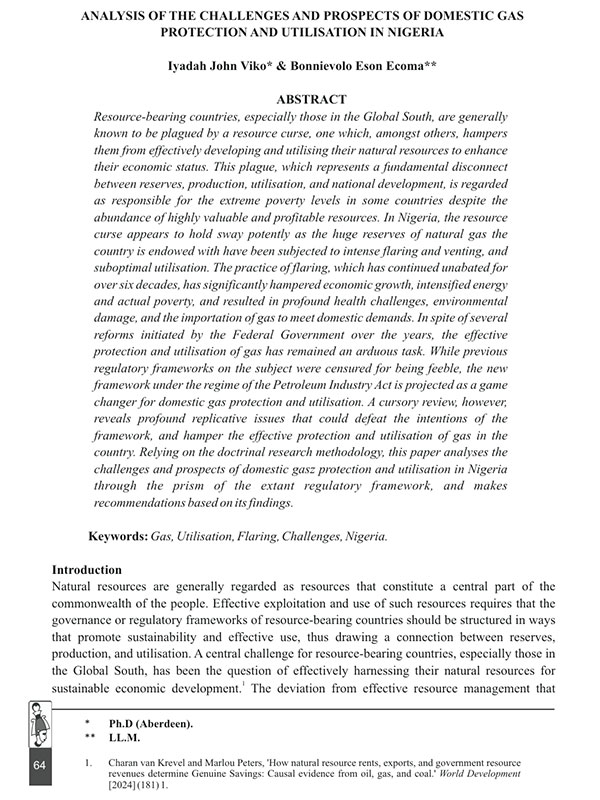
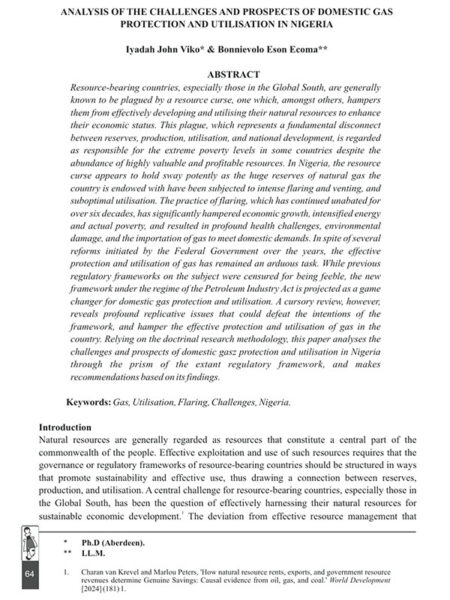
Analysis of the Challenges and Prospects of Domestic Gas Protection and Utilisation in Nigeria
Iyadah John Viko* & Bonnievolo Eson Ecoma**
Resource-bearing countries, especially those in the Global South, are generally known to be plagued by a resource curse, one which, amongst others, hampers them from effectively developing and utilising their natural resources to enhance their economic status. This plague, which represents a fundamental disconnect
between reserves, production, utilisation, and national development, is regarded as responsible for the extreme poverty levels in some countries despite the abundance of highly valuable and profitable resources. In Nigeria, the resource curse appears to hold sway potently as the huge reserves of natural gas the country is endowed with have been subjected to intense flaring and venting, and suboptimal utilisation. The practice of flaring, which has continued unabated for over six decades, has significantly hampered economic growth, intensified energy and actual poverty, and resulted in profound health challenges, environmental damage, and the importation of gas to meet domestic demands. In spite of several reforms initiated by the Federal Government over the years, the effective protection and utilisation of gas has remained an arduous task. While previous regulatory frameworks on the subject were censured for being feeble, the new framework under the regime of the Petroleum Industry Act is projected as a game changer for domestic gas protection and utilisation. A cursory review, however, reveals profound replicative issues that could defeat the intentions of the framework, and hamper the effective protection and utilisation of gas in the country. Relying on the doctrinal research methodology, this paper analyses the challenges and prospects of domestic gas protection and utilisation in Nigeria through the prism of the extant regulatory framework, and makes recommendations based on its findings.
Keywords: Gas, Utilisation, Flaring, Challenges, Nigeria.
INTRODUCTION
Natural resources are generally regarded as resources that constitute a central part of the commonwealth of the people. Effective exploitation and use of such resources requires that the governance or regulatory frameworks of resource-bearing countries should be structured in ways that promote sustainability and effective use, thus drawing a connection between reserves, production, and utilisation. A central challenge for resource-bearing countries, especially those in the Global South, has been the question of effectively harnessing their natural resources for sustainable economic development.1
*Ph.D (Aberdeen).
** LL.M.
- Charan van Krevel and Marlou Peters, ‘How natural resource rents, exports, and government resource
revenues determine Genuine Savings: Causal evidence from oil, gas, and coal.’ World Development
[2024] (181) 1.

Reviews
There are no reviews yet.